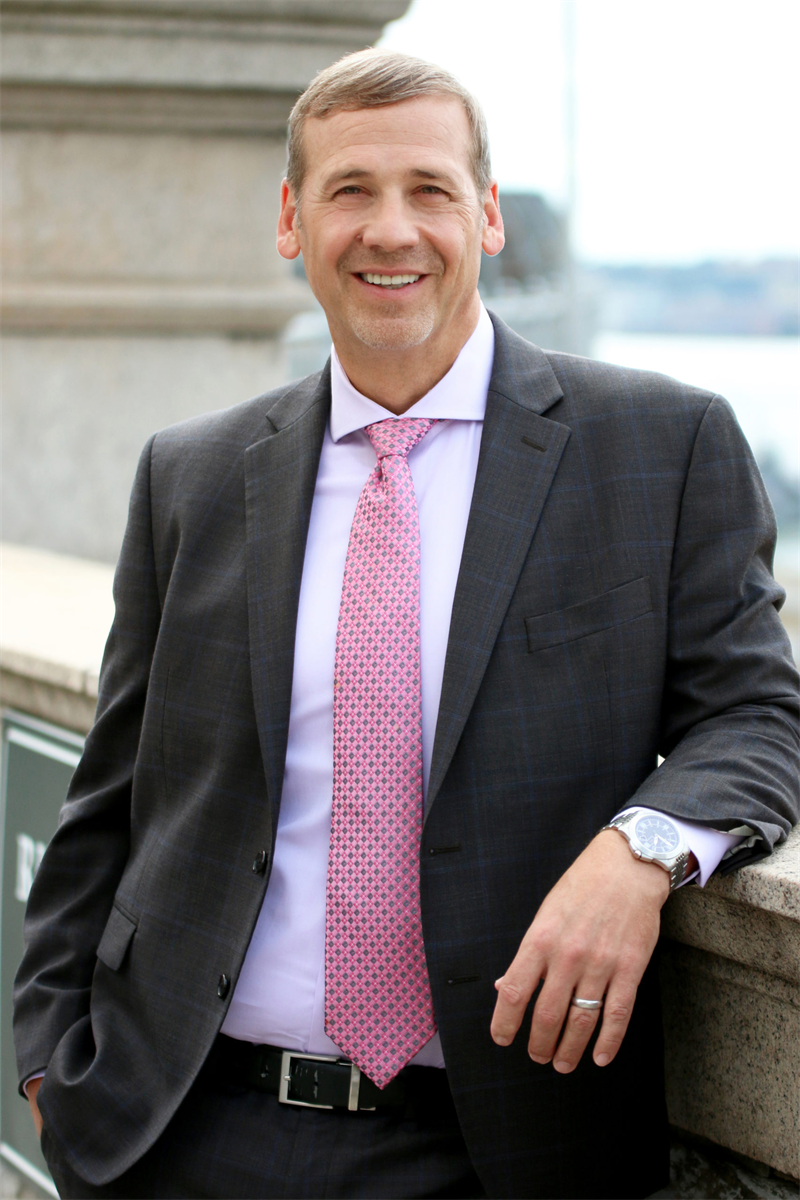
This year’s standout CE session at the NAB Mid-Year Meeting 2025 in Santa Fe was Ralph Peterson’s keynote, Managing When No One Wants to Work. Addressing the very real workforce challenges facing healthcare leaders today, Ralph challenged the idea that disengagement is inevitable. Drawing on more than 20 years of experience in long term care and leadership development, he used humor, storytelling, and memorable metaphors to reframe how leaders think about turnover, call outs, and morale.
Rather than focusing on compliance alone, the session emphasized the power of culture. Ralph shared practical strategies centered on communication, consistency, accountability, and appreciation, giving attendees tools they could apply immediately. Participants left energized and equipped with a clear roadmap for rebuilding trust, improving engagement, and creating workplaces where people truly want to work.
During the CE session, Ralph referenced a story that he was unable to fully share due to time. He wanted to be sure it was shared with everyone following the Mid-Year Meeting, as it powerfully reinforces the message of his session.
The Parable of the River
It was an elderly villager, out for his daily walk around the village, who was the first one to hear the cries for help. He stopped, turning his head toward the sound and listened. Maybe it was the wind, he thought. Or maybe it was one of the village kids getting a bit too rambunctious on the village playground. He stood still, listening, his mind swirling with possibilities. Then he heard it again.
“Help!” It was a boy and it was coming from the great river.
He paused for a second, not sure if he should run to the river or run to the village for help. He ran toward the river.
Two other villagers, seeing the older villager running toward the river, called out asking what was wrong. The older villager waved to them, yelling for them to follow him. Then they too, heard the boy. The three of them got to the river at the same time and saw a young boy, clinging to an overhanging tree, desperately trying to keep his head above water. The three of them quickly devised a plan and rescued the boy.
The following day, as the three men described what had happened to the other villagers, another cry for help pierced the air. All the villagers froze in place. A look of uncertainty covering their faces. Was that the wind? Could it be…? Then it happened again, louder this time and female.
The three men who saved the young boy the day before, dashed out of the village before anyone else had time to register the noise as a cry for help. In a moment, the rest of the villagers followed. There in the river, was a young girl, clinging to the same tree the boy had clung to the day before. The three villagers sprang into action and quickly saved the young girl.
The next morning four more people had to be rescued from the great river, then eight and then ten. The village elders called a meeting, inviting their best and brightest villagers and together they devised a rescue plan, complete with hoisting mechanisms, and rescue rigs made from corn husk ropes and wooden pulleys. Soon they were the best at rescuing people from the great river. So good, in fact, that they began to host annual banquets to celebrate their successes. They gave out awards and promotions based on the heroic acts of the villagers.
For years, the rescues continued, the banquets grew larger, and the awards piled higher. Yet not once did anyone ask the most important question: Why are people falling in the river in the first place?
This is known as The Parable of the River. And it is exactly why QAPI programs exist in senior care.
For nearly 50 years, beginning with the creation of Medicare and Medicaid in 1965, nursing homes were almost entirely reactive. They waited until a problem appeared—falls, infections, complaints—and then scrambled to fix it. Some centers got so good at reacting that they were celebrated for it, hosting banquets and handing out awards to honor their “rescues,” much like the villagers who perfected pulling people from the river.
In 2010, the Affordable Care Act required every nursing home to have a QAPI program. But here’s the truth: even today, most QAPI programs still operate downstream. They wait for the problem and then investigate it. A fall happens, so you study the fall. A medication error occurs, so you audit the med pass. That is traditional QAPI, valuable, necessary, but still reactive, just like the villagers.
At the same time, while many of us are still reacting to problems in real time, there are a handful of senior care centers who have taken a different approach. Rather than focusing on fixing problems as they occur, they’ve gone upstream, in search of preventative measures. They are known as Quality Award Winners.
Quality award winners identify their key work processes - rather than problems - and ask “Are we getting the best results from these processes? It asks, “Is there a way that we can do things faster, easier, safer, and more consistently?”
That’s the difference between being a good rescuer and being a true leader in senior care. One keeps jumping into the river and celebrates the number of lives saved. The other climbs upstream, finds out why people are falling in, and builds a bridge so they never have to fall in the first place.
That’s what award-winning QAPI looks like. It’s not about chasing every fall, infection, or complaint downstream. It’s about designing and improving the processes that prevent them in the first place.
The parable ends with a simple question that every leader in senior care must ask themselves: Are you content pulling people out of the river, or are you ready to go upstream?
As always, I hope I made you think, and smile.
Ralph Peterson
Unapologetically Pro-Manager | Keynote Speaker & Management Coach | Award-Winning QAPI Consultant
Contact: Ralph@RalphPeterson.com | (914) 656-0190